Inside China's TikTok Streaming Farms: The Operations Generating Thousands of Dollars a Day
A YouTube documentary series has pulled back the curtain on an underground industry where hundreds of phones run automated live streams around the clock, and a related scam in Zhejiang province landed one operator in prison.

By Sylvester Eyamah
Oct 2, 2026, 7:14 PM · 4 min read
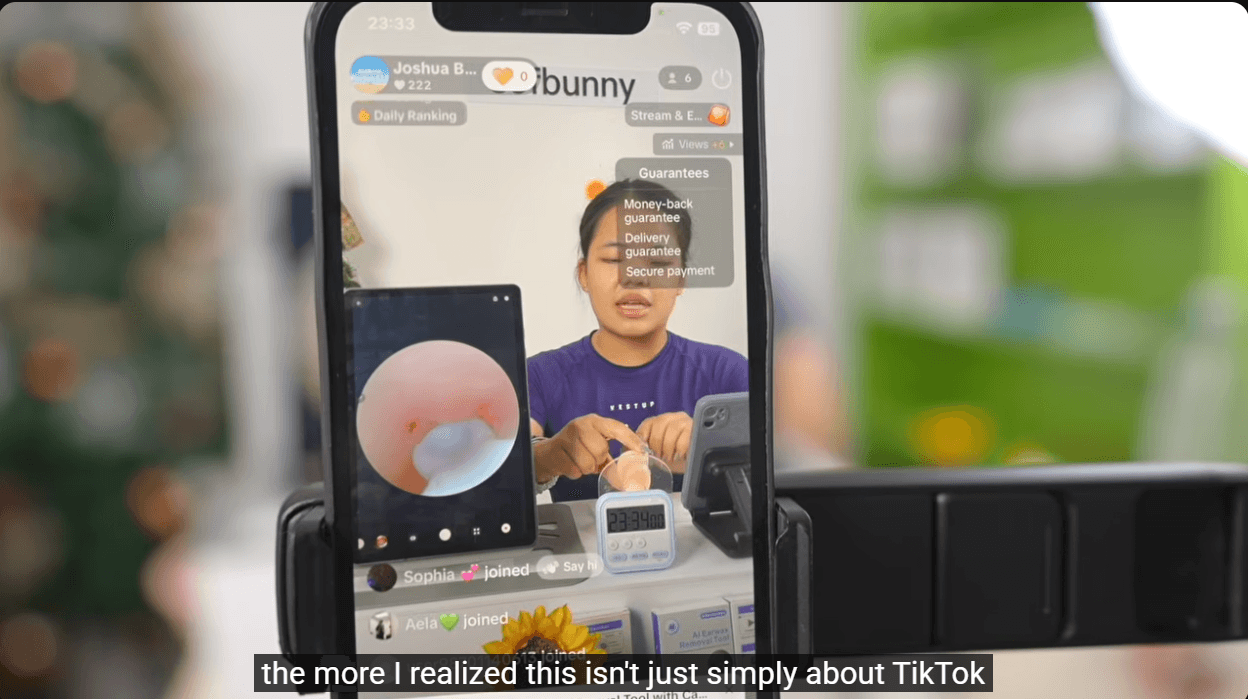
A YouTube documentary series has pulled back the curtain on an underground industry where hundreds of phones run automated live streams around the clock, and a related scam in Zhejiang province landed one operator in prison.
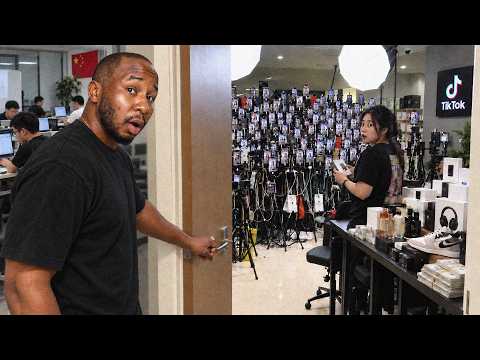
A YouTube video titled "i found China's $1,000,000/day Tiktok streaming farm EP. 5" has drawn nearly 600,000 views since its release on October 1, 2026, documenting what appears to be a large-scale operation running automated TikTok live streams in China. The video, published by the channel Uncut Steven, is part of a series exploring the phenomenon of "streaming farms" — operations that use dozens or hundreds of phones to run pre-recorded or AI-generated content continuously on the platform.
What Are Streaming Farms?
Streaming farms are physical setups where multiple devices run TikTok or Douyin (the Chinese version of TikTok) simultaneously. The streams are often automated, showing looping videos, product advertisements, or AI-generated hosts rather than live human presenters. The goal is to generate revenue through platform payouts, viewer donations, and TikTok Shop sales without requiring a human to be on camera at all times.
These operations have proliferated in China as the creator economy has matured and the barriers to entry have fallen. The economics are simple: if one phone running a live stream earns even a small amount per day, 500 phones running continuously can generate thousands of dollars in aggregate revenue. The video series documents one such operation, though the specific claims made in the video have not been independently verified by major news outlets.
The $415,000 "Brushing"
The streaming farm phenomenon is related to but distinct from a more clearly documented fraud case that was covered by the South China Morning Post. In that case, a man surnamed Wang in Zhejiang province operated 4,600 mobile phones to artificially inflate viewer counts, likes, and comments for TikTok live streamers.
Wang's operation was a "brushing" service. He sold fake engagement to creators who wanted to appear more popular than they actually were, a practice that misleads both audiences and platforms. Over less than four months, his operation generated approximately $415,000, or about 3 million yuan.
The scheme collapsed when authorities traced the operation back to Wang. He was sentenced to one year and three months in prison and fined approximately $7,000 for illegal business operations. The case highlighted the scale of China's fake engagement industry, where hundreds of thousands of phones can be deployed to manipulate platform metrics.
A Related Case: The Rise and Fall of Zheng Xiang Xiang
A separate but related story involves a Chinese influencer known as Zheng Xiang Xiang, who reportedly earned millions in a single week by reviewing products in three-second video segments. Her method was unusually efficient: she would mention multiple products in rapid succession, allowing her to monetize dozens of items in a single short video.
However, Zheng Xiang Xiang's account was eventually banned by Douyin. Reports indicated that the products she promoted were low-quality imitations of well-known brands, and her rapid-fire review style was designed to bypass platform scrutiny while maximizing advertising revenue. Her case illustrates the fine line between innovative marketing and deceptive promotion that many creators walk in China's highly competitive influencer economy.
The Broader Context
China's short-video and live-streaming market is the largest in the world. Douyin alone has over 700 million daily active users, and the competition for viewer attention is intense. This has created fertile ground for schemes that promise outsized returns through automation and volume rather than genuine engagement.
Platforms have responded by tightening their rules around live streaming. Douyin has introduced verification requirements for live streamers, restricted the use of pre-recorded content, and penalized accounts that artificially inflate engagement. But enforcement remains a cat-and-mouse game, as operators develop new methods to evade detection.
For viewers, the rise of streaming farms raises questions about what they are actually watching when they tune into a TikTok live stream. The human presenter they see may not be live at all, and the engagement metrics that signal popularity may be entirely manufactured.
The specific claims made in the Uncut Steven video series have not been independently verified by major news organizations. The South China Morning Post case and the Zheng Xiang Xiang story are documented incidents covered by established media outlets.
You can watch the Uncut Steven below
Watch the video
 Inside China's TikTok Streaming Farms: The Operations Generating Thousands of Dollars a DayWatch on The Daily Chronicle Video
Get the biggest stories in your inbox
A concise morning briefing, curated by Chronicle editors.